Advancing Parkinson’s Research
One Patient’s Journey, One Scientist’s Mission

Meet a patient learning to navigate life with Parkinson’s — and a scientist dedicated to advancing research in the field.

One Patient’s Journey, One Scientist’s Mission
For Rhonda Leaverton, her diagnosis of Parkinson’s disease arrived like a thunderclap. “My doctor said, ‘I think you have Parkinson’s. It’s treatable, but it’s not curable. Bam!’” she recalled. “It was just such a shock.”
A nurse since the age of 21, Rhonda was long accustomed to being the one caring for others, but suddenly found herself the one in need of support — a shift in roles that was hard to accept.
“It’s really hard for me to let people do things for me. I didn’t want to be dependent on anybody. That was the hardest part,” she said.
According to research,1 Parkinson’s is one of the world’s fastest-growing neurological conditions, affecting nearly 12 million people in 2021 — a number expected to rise by roughly 50% by 2035. While current treatments can help manage symptoms, there is no cure for the disease. That urgent reality underscores the stakes for people like Rhonda, and is why scientists and clinicians are pushing to better understand the condition.

Watch how Rhonda (left) and Kim’s (right) paths converge — and how perseverance, science and innovation are working to uncover what’s next for Parkinson’s.
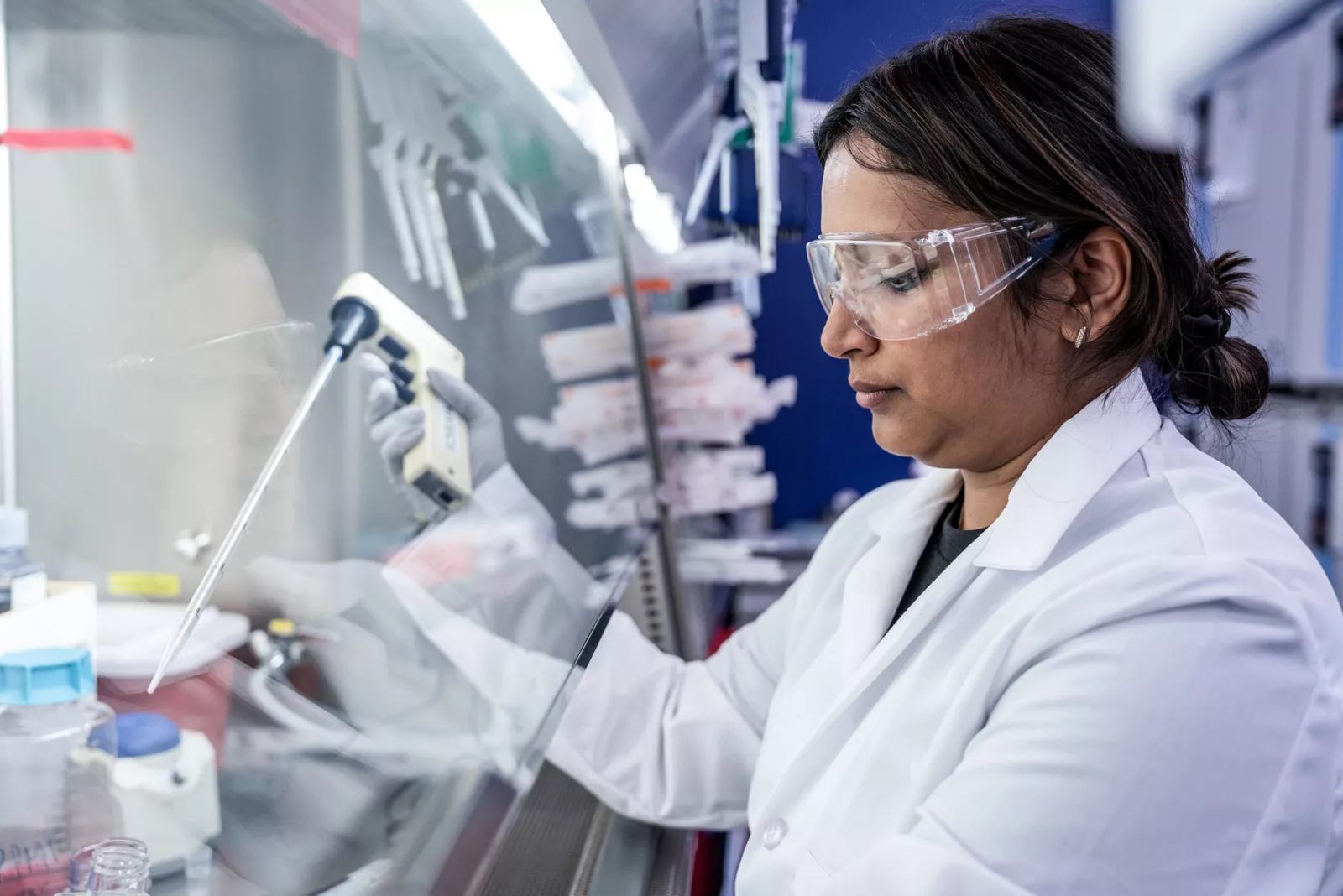
Kim Pfleeger, Ph.D., senior scientific director, neuroscience development, is one of the many researchers at AbbVie advancing research in Parkinson’s. Driving her work are the stories of patients like Rhonda, as well as Kim’s own deep, personal connection to the disease.
“My father was diagnosed with Parkinson’s at about 42, so I was in high school,” she said. That experience, paired with a lifelong fascination with science, shaped her career path. “He motivates me, and his Parkinson’s diagnosis sparked my interest in neuroscience.”
As a chronic and progressive disorder, Parkinson’s, by its nature, is highly complex. Most people may think of motor symptoms such as tremors, but other, less visible symptoms such as cognitive issues can also persist.
“Every single patient is different, their symptoms are different, the speed at which they progress is different,” said Pfleeger.
Studies have shown2 that alongside visible and invisible challenges, Parkinson’s can also bring depression, anxiety, sleep disturbances, psychotic symptoms and cognitive decline — symptoms that profoundly shape quality of life and often become more pronounced as the disease progresses. These layers of complexity, and their deeply personal impact on patients like Rhonda, are exactly what drive AbbVie scientists like Kim to keep pushing forward.
To advance research and development for Parkinson’s, researchers across AbbVie are focused on:
“People are the heart of everything we do. They’re the reason we keep persevering in these spaces that are very challenging,” Pfleeger said.
For Rhonda, perseverance has meant redefining her life on her own terms. “There’s more answers out there. I’ve been able to live a life that I’ve wanted to live, full of happiness, family, traveling, dancing,” she said. Rhonda says she feels hope, in part, because she knows there are people like Kim working to find answers.
And in turn, it is patients like Rhonda who inspire Kim and AbbVie’s broader aim. “A lot of the conditions take a piece of that person away from them, whether it be movement, activity or cognition,” Kim said. “That’s what we strive to do, is try to preserve it as much as possible.”
That mission — restoring and preserving what disease can take away — keeps scientists like Kim focused on the long game.
“Finding a cure or treatments for Parkinson's is not going to be a sprint,” Kim said. “It’s going to be a marathon. And we’re here for that marathon.”


Unless otherwise specified, all product names appearing in this internet site are trademarks owned by or licensed to AbbVie Inc., its subsidiaries or affiliates. No use of any AbbVie trademark, trade name, or trade dress in this site may be made without the prior written authorization of AbbVie Inc., except to identify the product or services of the company.
Copyright © 2026 AbbVie Inc. North Chicago, Illinois, U.S.A.
The product-specific site Internet site that you have requested is intended for the residents of a particular country or countries, as noted on that site. As a result, the site may contain information on pharmaceuticals that are not approved in other countries or region. If you are a resident of a country other than those to which the site is directed, please return to AbbVie.com or contact your local AbbVie affiliate to obtain the appropriate product information for your country of residence. The Internet site that you have requested may not be optimized to your screen size. Do you wish to continue to this product-specific site?