
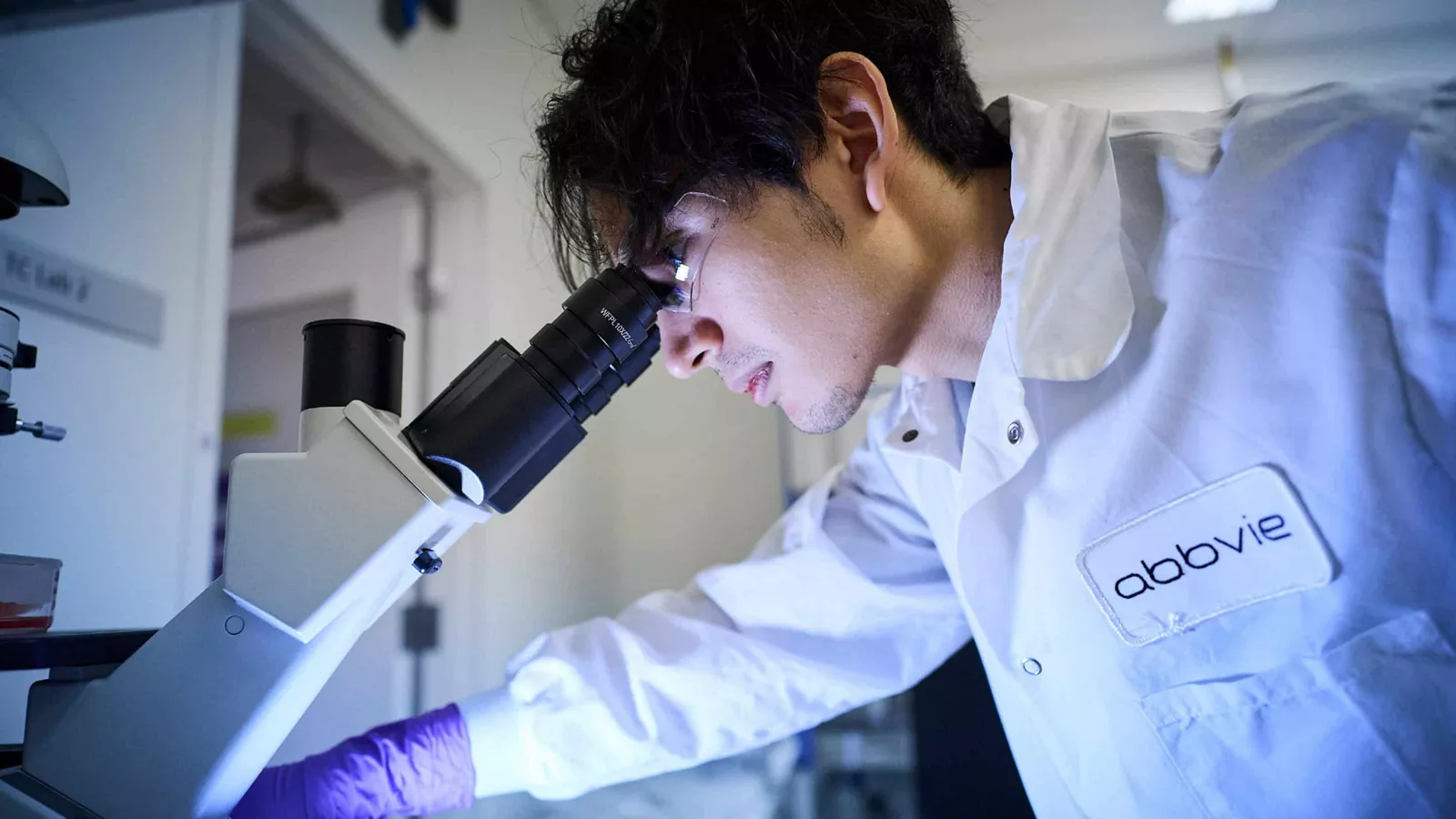
The Answer Is Inside You: The Complexities of Autoimmune Research
Advances in technologies and research approaches are helping to drive progress in treating autoimmunity.
Key Takeaways

Autoimmune conditions occur when the immune system sends inflammatory signals to attack healthy tissue in the body.1 There are no cures for these conditions, and current treatments are focused on symptom management.1
Scientists are exploring novel approaches that aim to reset the immune system.
Treatment approaches for B-cell malignant blood cancers are helping to inform research into B-cell depletion for autoimmunity.
Technologies like precision medicine and genetic medicine are leading to the development of more personalized treatment approaches.
Anita remembers the doctor asking, “Are you trying to die out here? You have kids.”
An avid scuba diver, she first began experiencing severe gastrointestinal symptoms in the late 1980s but didn’t see a provider until several years later. She was diagnosed with ulcerative colitis, a chronic inflammatory bowel disease that causes long-lasting inflammation and ulcers. Following her diagnosis, Anita was prescribed what was the standard of care therapy at the time, but her symptoms continued.
“It was terrible… I actually didn’t see another doctor. It was such a bad experience that I didn’t see anyone [until] about 10 years later.”
Anita eventually found a care team she could trust and was put on a therapeutic regimen that helped control her disease. She was no longer going to the bathroom 30 to 40 times a day.
The care journey for people like Anita raises larger, more complex questions about the biology of autoimmune conditions like ulcerative colitis. What’s driving the proliferation of these diseases in certain patients? And what is needed to deliver targeted treatments that go beyond the standard of care?
The answers to these questions might already exist within our own bodies. Researchers at AbbVie are embracing new technologies, platforms and insights to explore existing pathways and help drive innovation to naturally “reset” the immune system and achieve the ultimate goal of helping patients like Anita achieve remission.
As a field, we’re still looking to understand how autoimmune disease forms. One of the biggest challenges is that these conditions are rarely driven by a single factor. Instead, they are often caused by multiple overlapping pathways. This makes autoimmune disease quite difficult to address with a single intervention.

When the immune system turns against the body
The immune system is made up of a network of cells, tissues and organs that are constantly assessing the body for potential pathogens to attack, which manifests as inflammation.1 But in certain situations, that system can misfire, sending inflammatory signals to attack healthy tissue.1 Over time, this creates significant damage in the body, which can appear as pain, redness or swelling.1


Despite decades of research, scientists are still looking to understand the root cause of autoimmune disease. “As a field, we’re still looking to understand how autoimmune disease forms. One of the biggest challenges is that these conditions are rarely driven by a single factor,” said Jon Sedgwick, Ph.D., senior vice president and global head, discovery research, AbbVie. “Instead, they are often caused by multiple overlapping pathways. This makes autoimmune disease quite difficult to address with a single intervention.”
The standard of care for autoimmune disease focuses on managing symptoms by suppressing the immune system. But the effectiveness of these therapies for patients is limited. “Right now, the field has been able to deliver therapeutics that can tamp down inflammation, but we’re not yet at the point of returning patients to a state of normalcy,” said Ann Eldred, M.D., head of early programs, immunology clinical development, AbbVie. “We’ve learned how to address the end of the story, but we’re now working on starting at the beginning.”
Starting at the beginning means treating the root cause of autoimmunity. AbbVie researchers are now exploring whether it’s possible to deliver lasting homeostasis by helping the immune system naturally reset itself.
Learning from cancer treatment to help induce immune reset
One treatment method that could potentially help reset the immune system is B cell depletion, an approach originally developed and used to treat certain blood cancers.2
Blood cancers called B cell malignancies form when B cells, which are a type of white blood cell that helps the body’s immune system fight infections, become dysregulated and grow uncontrollably.3 A treatment breakthrough for these cancers came in the form of monoclonal antibody therapy, a type of immunotherapy that induce the body’s immune system to specifically target and kill malignant B cells with certain genetic signatures, depleting these cells from the body.4
“This new class of therapies showcased a more precise way to control and target cancerous B cells. We knew pathogenic antibodies made by B cells were important in some autoimmune conditions, but a natural next step for researchers was to consider how instrumental B cells are in the formation of autoimmune conditions more broadly,” said Sedgwick.
The future of autoimmune disease treatment involves studying therapeutic approaches that dampen inflammation and restore tolerance to help return the body to its natural state. “Before, we were looking for the tool that the cell was using to cause inflammation. Now, we're studying approaches that can take out the whole cell to eliminate disease activity entirely,” said Eldred.
New technologies spark new approaches, insights for immunology research
Technology is helping to accelerate the pace of innovation. AbbVie researchers have access to some of the most comprehensive data sets in immunology, and they’re leveraging artificial intelligence tools to mine data strategically for relevant patient profiles, to assess treatment results and determine new molecular targets and clinical options.
In vivo CAR-T has potential for the treatment of autoimmunity. We’re studying how the transient nature of lipid nanoparticle based mRNA delivery approaches could help potentially eliminate certain disease causing immune cells effectively.
Approaches like precision medicine can identify targeted treatment options based on a patient’s specific disease biology.5 The technology has led to significant progress in cancer care, and it also shows potential across immunology. At AbbVie, teams are using it to deepen understanding of disease mechanisms, identify novel mechanisms of action and drug targets, and inform more precise clinical trial design, including diagnostic tools and endpoints.
Other technologies like genetic medicines aim to treat disease by giving cells new genetic instructions. One example called in vivo CAR-T, also known as in situ CAR-T, can involve the delivery of messenger RNA (mRNA) into the body through encapsulated delivery vehicles called lipid nanoparticles. The goal of in vivo CAR-T is to reprogram a person's T cells to transiently seek out and kill faulty cells with certain genetic signatures that are thought to be involved in autoimmune disease.6 “Research exploring the potential of in vivo CAR-T treatment could help inform new approaches to treating autoimmune diseases. The aim is to understand how to leverage genetic medicines to target the root cause of disease in areas of unmet need," said Sedgwick.
A field built on persistence
AbbVie scientists are committed to uncovering the mysteries of the immune system and translating these insights into possibilities for patients. For patients with autoimmune diseases like Anita, these efforts inspire hope for the future.
“I think at some point you just have to make up your mind not to give up. Trust the doctors, the scientists, all these people … they're working on it,” she said.
Media inquiries:
[email protected]



Unless otherwise specified, all product names appearing in this internet site are trademarks owned by or licensed to AbbVie Inc., its subsidiaries or affiliates. No use of any AbbVie trademark, trade name, or trade dress in this site may be made without the prior written authorization of AbbVie Inc., except to identify the product or services of the company.
Copyright © 2026 AbbVie Inc. North Chicago, Illinois, U.S.A.
