
Can We Find Cures Faster?
Learn how AbbVie researchers find and advance ideas that have the potential to cure.
On a mission to cure diseases faster
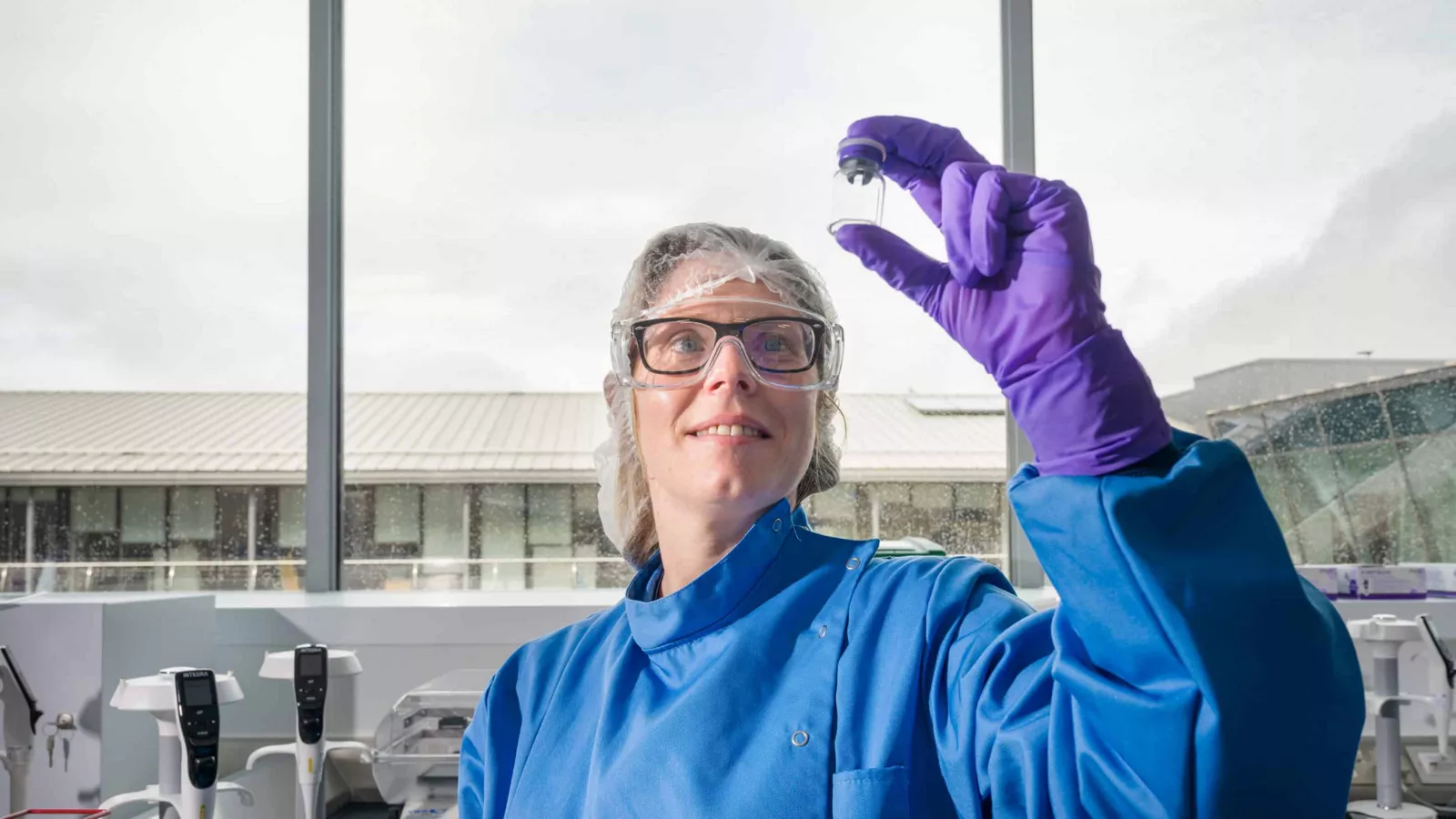
For scientists like Seble Wagaw, finding a cure is the ultimate ambition. And the moments that bring them close leave a lasting impression.
Wagaw can still recall one such moment years ago. As a research scientist, she was part of a team of over 700 AbbVie researchers developing a potential therapy to treat the hepatitis C virus. And while checking email one morning she saw it–the results of the phase 3 clinical trial.
“That early read out was a sign that what we were doing was incredibly efficacious in the field,” she recalled. “From there, the race was on.”
The curative therapy, over a decade later would be attributed with treating almost 1 million patients with the hepatitis C virus.
“Developing novel medicines is hard. Most of the time, compounds don’t make it all the way through to development, so to be part of a project that made it through commercial launch to have a direct impact on so many patients is incredible,” she said.
Wagaw and thousands of other researchers at AbbVie strive for moments like this, opportunities to chase big ideas and learn from failures along the way to ultimately deliver therapies that can potentially cure patients. Read on to learn more about what AbbVie is doing to empower these teams to seek out and advance ideas with curative potential.
Defining cures within AbbVie
The chance to discover a drug that can cure disease, and profoundly impact human health, is why researchers like Wagaw chose to work in pharmaceuticals. But realizing this goal demands not only great passion and talent on their part, but also strong collaboration among scientists of all different disciplines.
What we all ultimately want is a cure, and to realize that goal we must continue to push our organization to think and dream big about how to move from making incremental improvements to making cures.

Determining what is a curative therapy
To work together effectively in finding cures, researchers need a clear and shared understanding of what a cure means. But the definition and meaning look different from one therapeutic area to another. This is because many factors impact how cures are defined, including:
- how well the body responds to treatment
- the duration of treatment
- the amount of time people spend off treatment
- the extent to which a therapy can restore function
To address this issue, researchers at AbbVie have rallied to define cures for each of the company’s core therapeutic areas and conduct assessments to understand and characterize “what it takes” to develop them. More broadly, the company has also established a broader definition of cures within a continuum of treatment options.
One end of the continuum acknowledges therapies that offer more modest improvements over existing standards of care. Further along the path are therapies that can deliver more significant improvements over current standards of care and demonstrate an ability to modify disease activity. Even further along are solutions that are closest to what we commonly think of as cures: therapies that enable patients to live treatment-free and disease/infection-free after treatment.

AbbVie is prioritizing innovative thinking to help develop potential curative therapies. Leading the charge is Jochen Salfeld, Ph.D., head of Pathway to Cures and vice president of discovery biologics, AbbVie.
“What we all ultimately want is a cure, and to realize that goal we must continue to push our organization to think and dream big about how to move from making incremental improvements to making cures,” says Salfeld.
Accelerating cures by understanding the drivers of disease
Gaps in our understanding of what causes complex diseases like cancer and autoimmune disease is one of the roadblocks to finding cures. So as part of AbbVie’s strategy to find cures faster, the company leverages genetics and genomics research, precision medicine, and advanced technologies like AI to fill in these gaps.
“In the past finding cures was a somewhat siloed process. But today, thanks to all the advances in technology, and much stronger collaborations between industry, academia and patients, we're now able to study the unique biology of each individual disease in much greater detail and therefore better understand root causes,” says Tina Baumgartner, senior principal research scientist, AbbVie.
What was previously a once-in-a-lifetime moment, will hopefully become a reality for every scientist at AbbVie and importantly, the patients our therapies aim to help.
Genetics and genomics research capabilities enable researchers to better understand the function of genes, how they interact and how variations contribute to how patients respond to therapies.
Meanwhile, the field of precision medicine empowers researchers to leverage diagnostic tests and molecular data across different patient profiles to drive the delivery of more targeted therapies.
And, through data convergence, and AbbVie’s R&D Convergence Platform (ARCH), researchers now have the ability to bring together different types of data – including genomic data, clinical trial data and data from scientific publications – to generate new insights.
“With ARCH, we’re able to learn new things about disease definitions, discover new indications, and take a deeper look into understanding the molecular underpinning of a disease,” says Howard Jacob, vice president and head of genomics and data integration, AbbVie.
Advancing ideas with curative potential
Through an initiative known as Pathways to Cures, researchers at AbbVie have also worked together to identify programs they believe to have curative potential – across therapeutic areas such as oncology, immunology and neuroscience.
Programs are in development for multiple disease areas and targets. Some focus on advancing a single therapy while others focus on combining different treatments, or changing the ways therapies are delivered. Because they vary, each program has a unique support network, different from the typical pipeline process, to advance each novel idea.
“With these programs, we seek to provide much more flexibility in the development path so we can learn more through clinical experimentation and thereby develop scenarios for each of these programs to uncover their potential,” says Salfeld.
Inspiring new ideas with curative potential
To ensure teams continue to think big and deliver new ideas with curative potential, Pathway to Cures also works to instill a curative mindset across R&D by challenging how teams think about and solve problems through hackathons and an annual Innovation Challenge. In the challenge, cross-functional teams pitch new research ideas that could ultimately be a cure.
Together these programs tap into AbbVie’s diverse, world-class scientific talent and create venues for cross-functional collaboration in the pursuit of novel therapeutics.
Across both programs, over 72 curative ideas have come forward, with participation from over 250 AbbVie scientists and employees in the first three years. Winners gain additional funding, recognition and support within R&D to help advance their projects.
200
participants in the
Innovation Challenge
250+
participants in Pathway to Cures
Hackathons, strengthening ideas
and networks across R&D
“With the new capabilities we have in place, the programs we’re advancing with curative potential, and the shared passion and focus across all our teams, the chance to deliver cures has never been closer,” says Salfeld. “What was previously a once-in-a-lifetime moment, will hopefully become a reality for every scientist at AbbVie and importantly, the patients our therapies aim to help.”

Curious for more?
Check out our first-ever podcast series for more insightful conversations on the human side of health care innovation.
Related Content


Unless otherwise specified, all product names appearing in this internet site are trademarks owned by or licensed to AbbVie Inc., its subsidiaries or affiliates. No use of any AbbVie trademark, trade name, or trade dress in this site may be made without the prior written authorization of AbbVie Inc., except to identify the product or services of the company.
Copyright © 2026 AbbVie Inc. North Chicago, Illinois, U.S.A.
